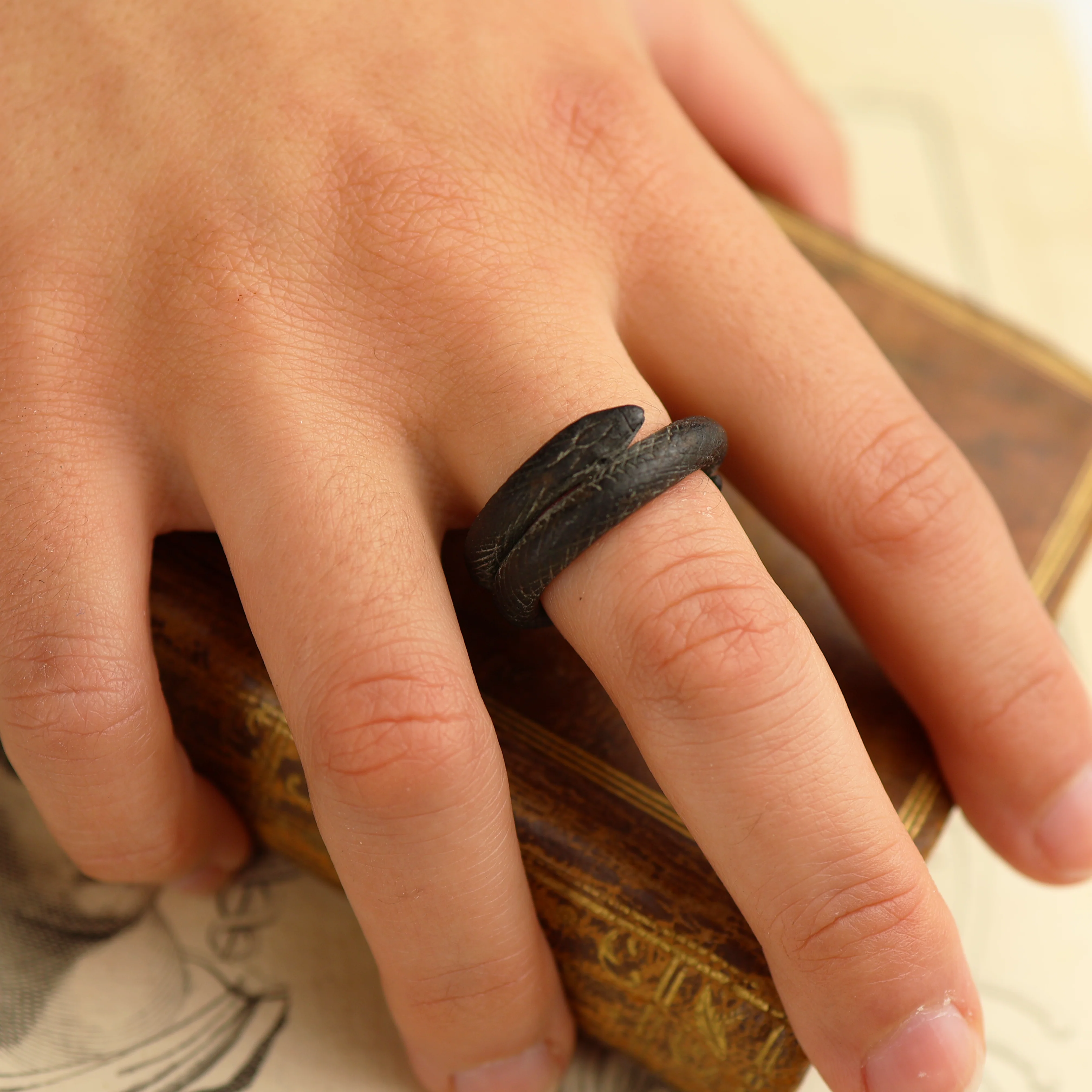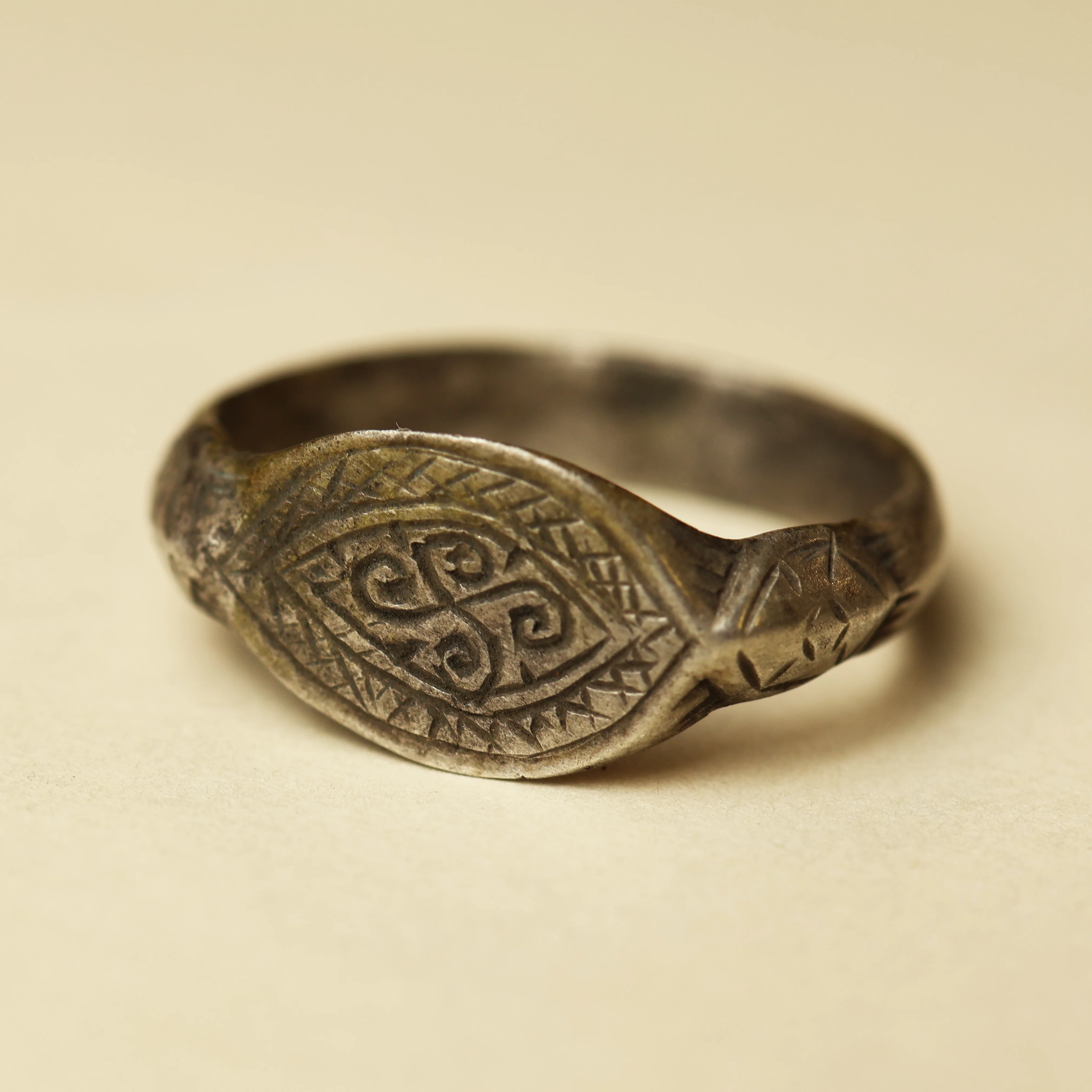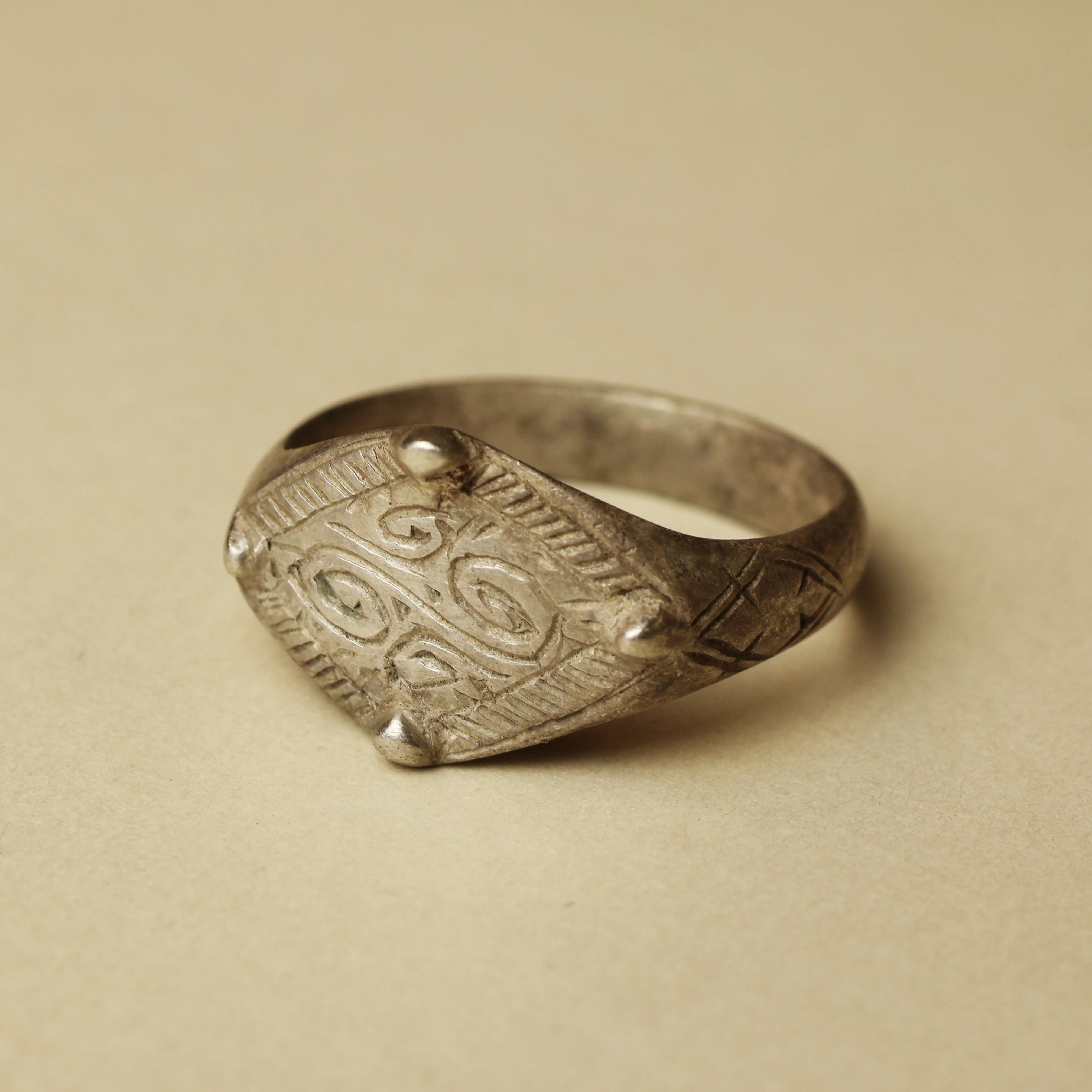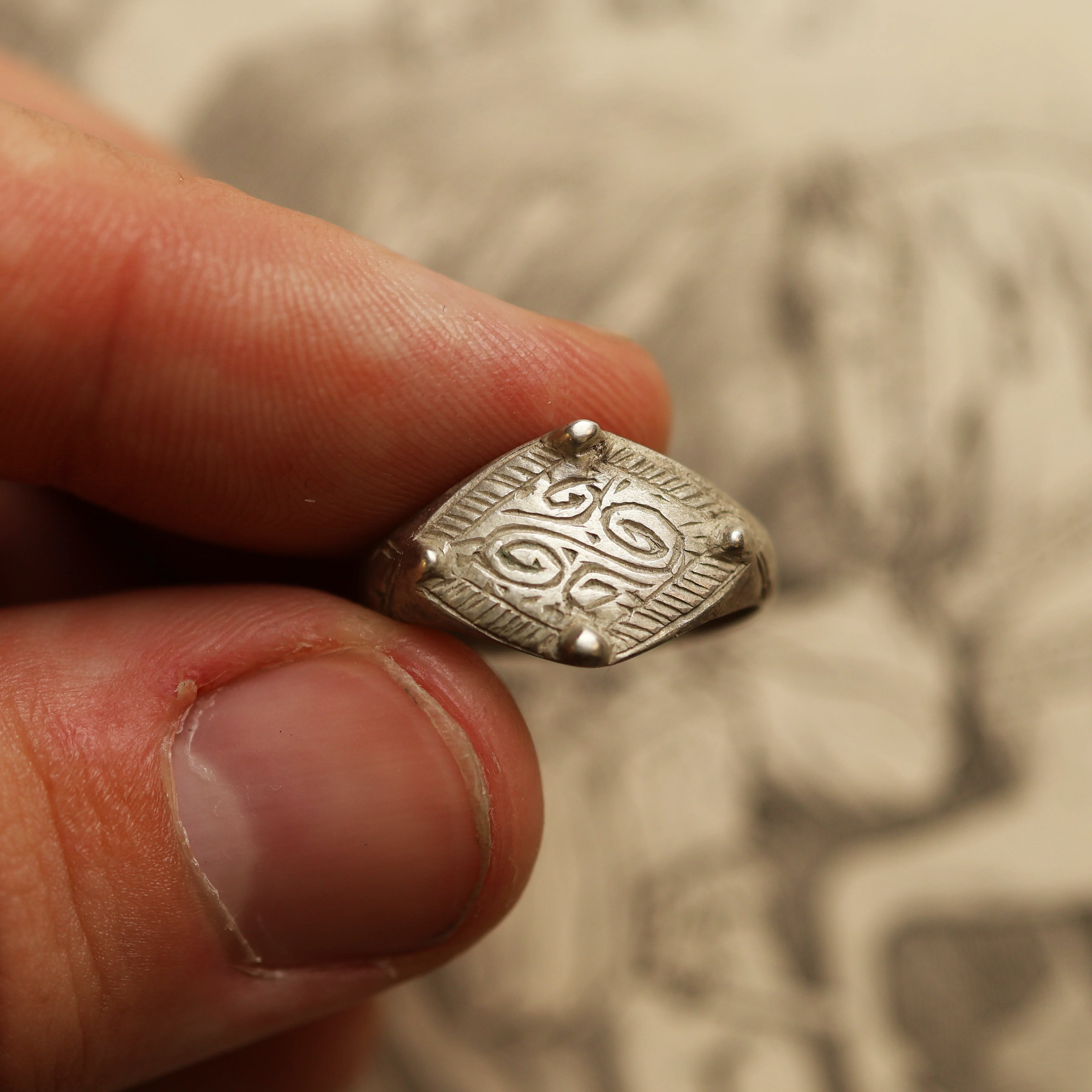
Medieval Galloping Horse Silver Ring
Date: c. 15th - 16th Century
Weight: 3.64 grams
Size: 8.25 (U.S.) / Q (U.K.)
History of the Artifact
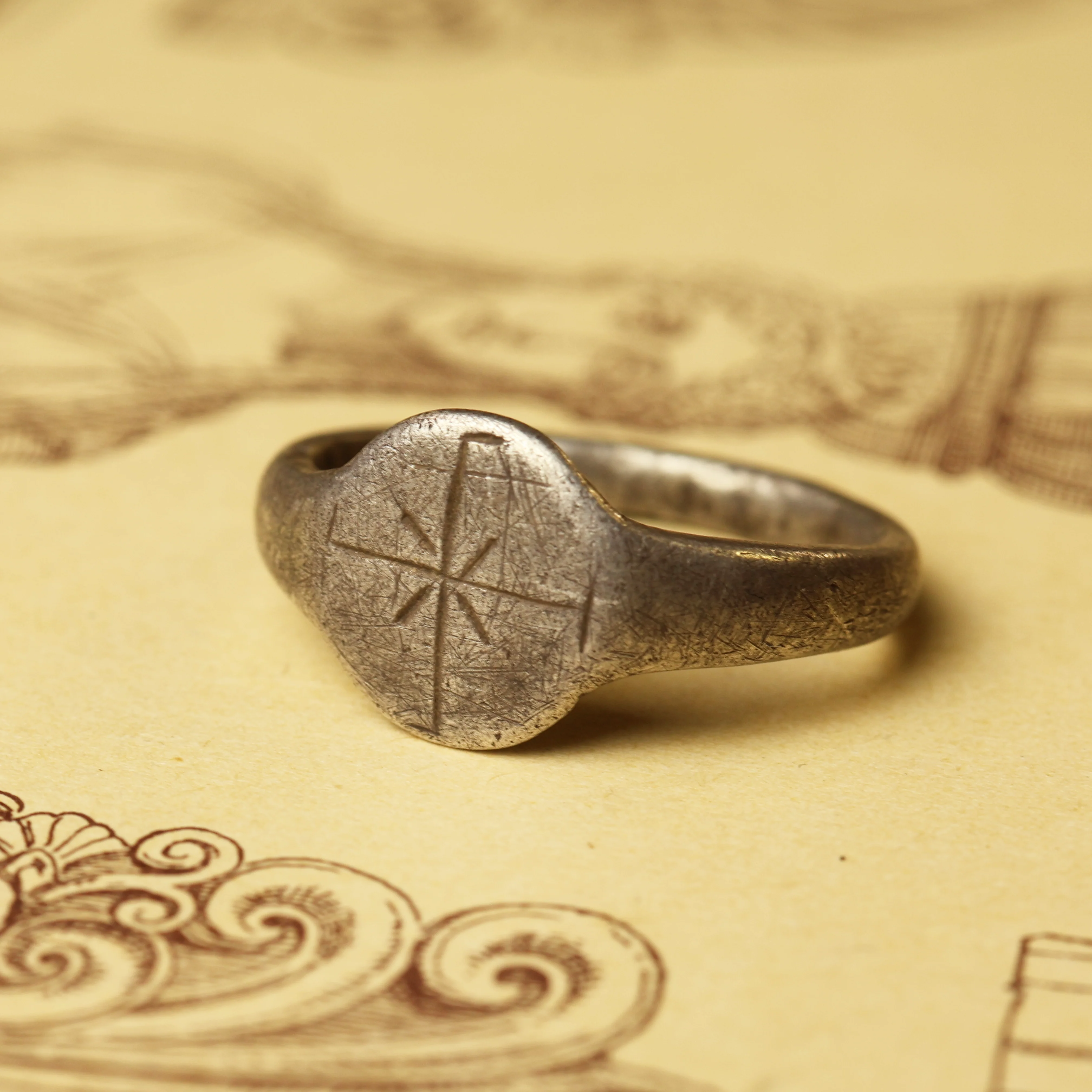
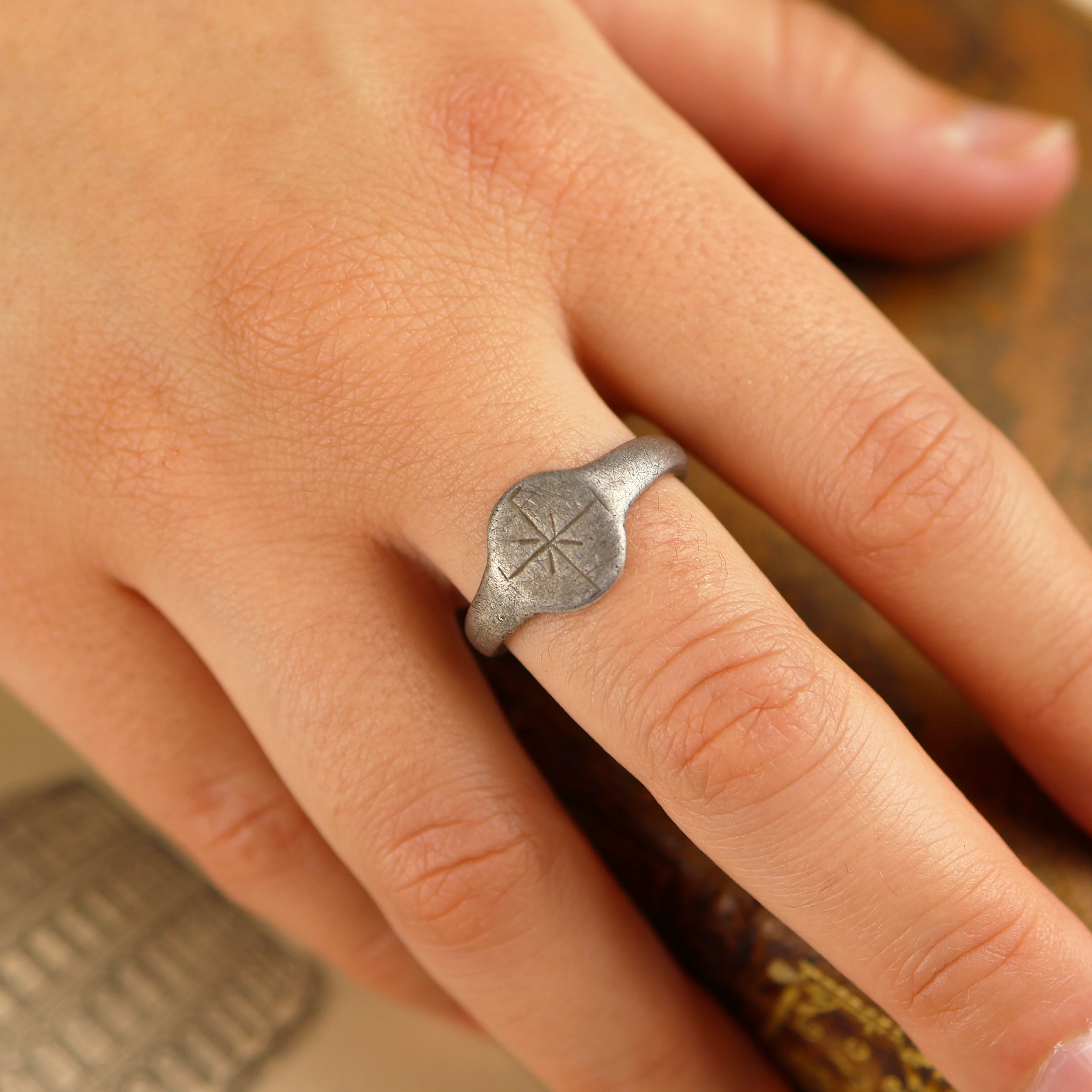
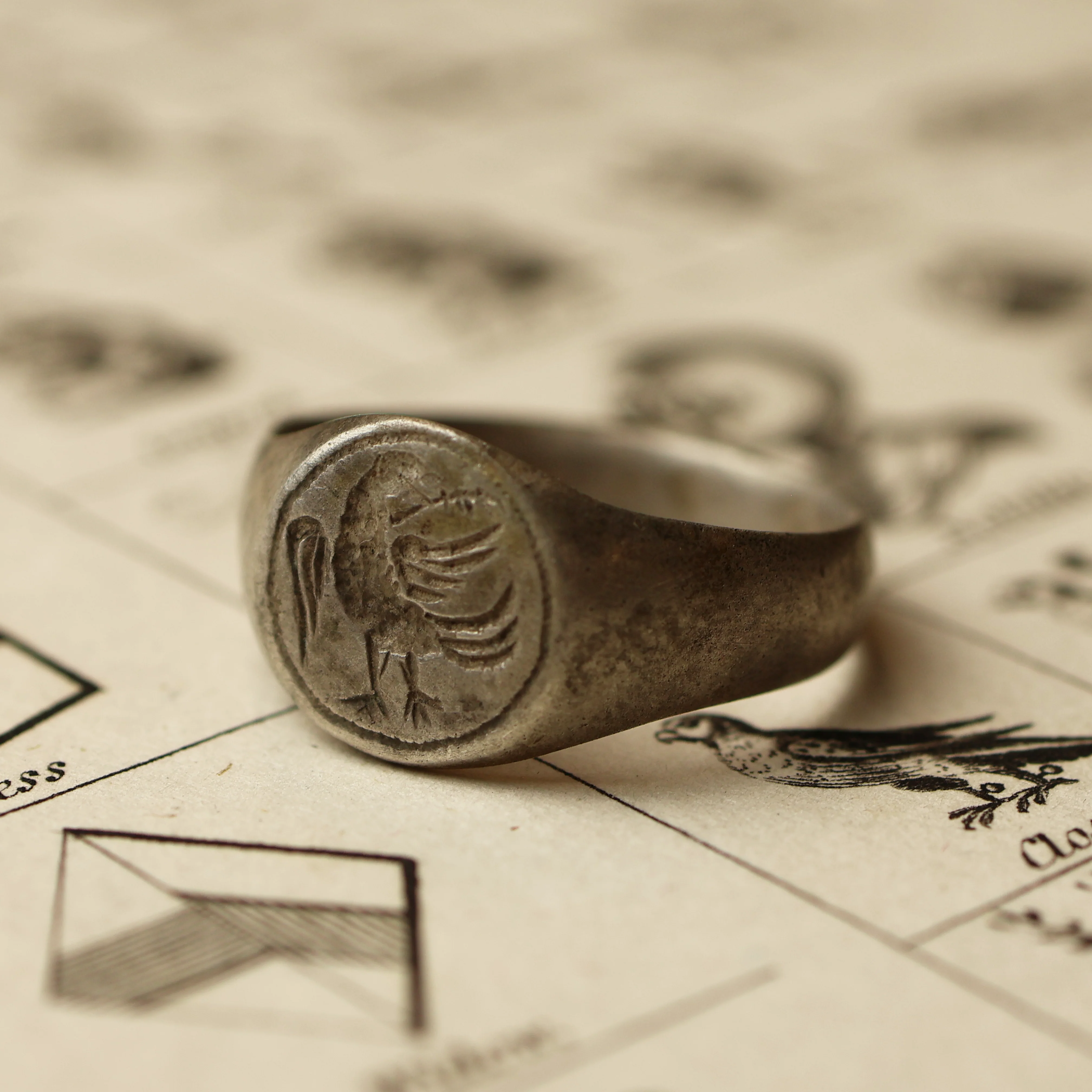
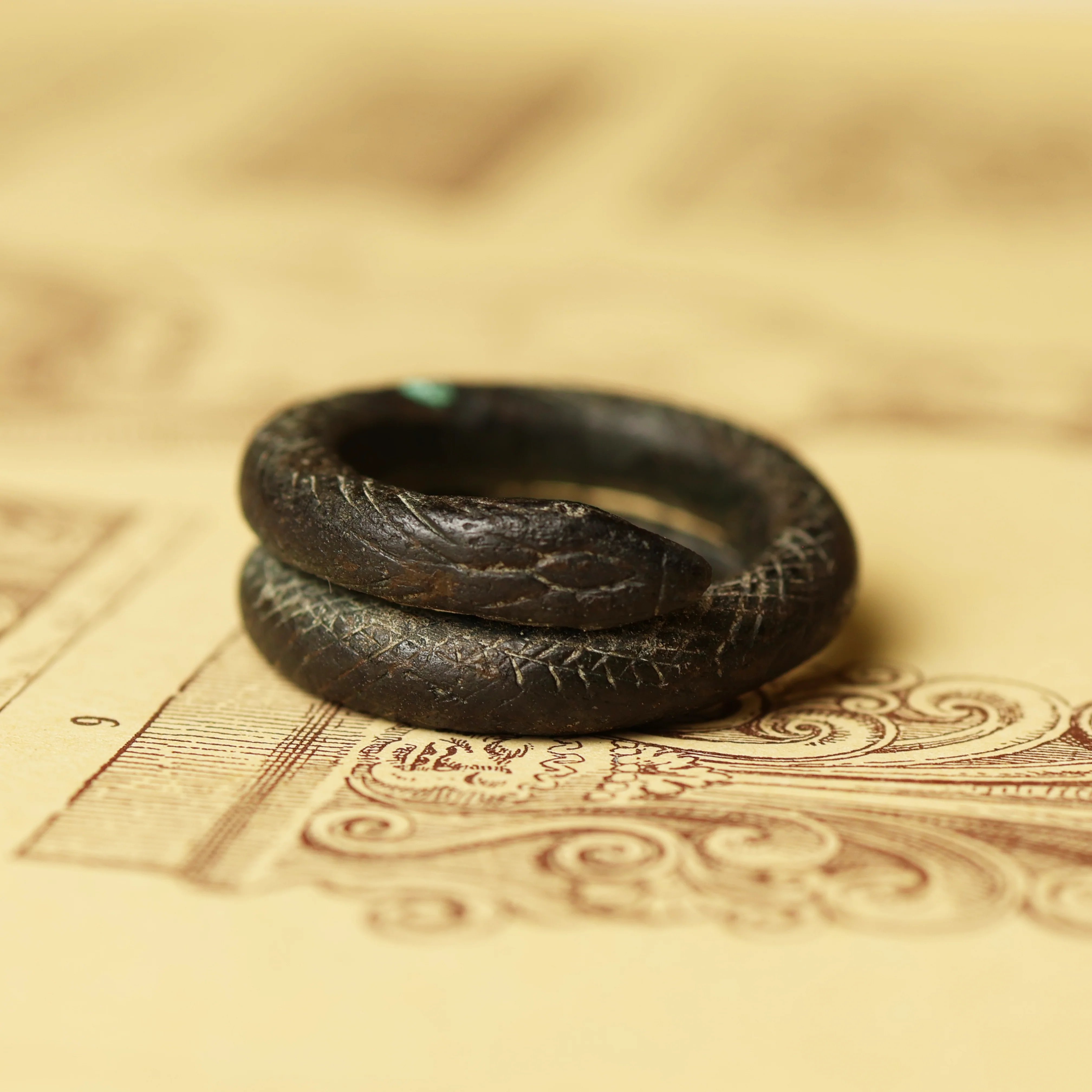
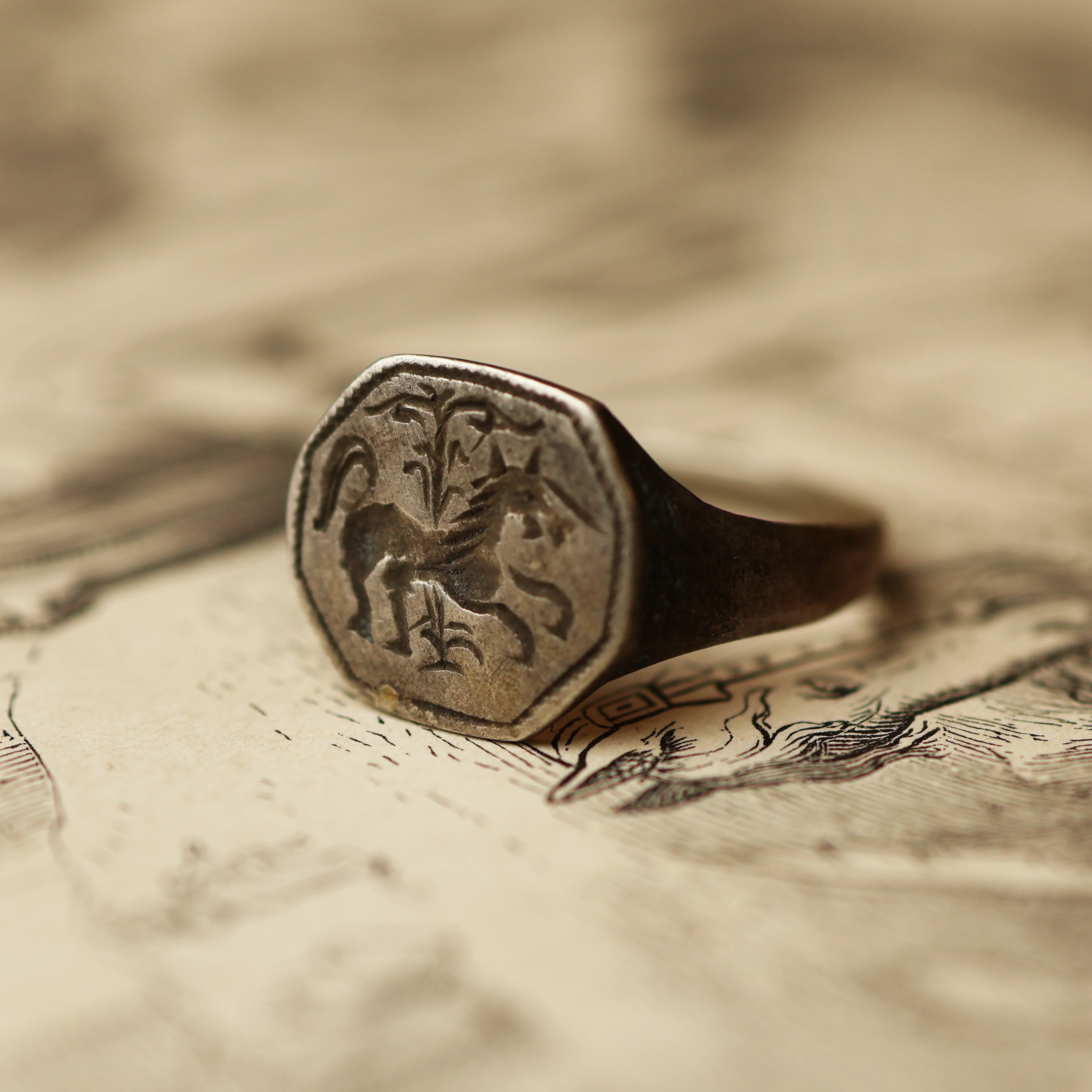
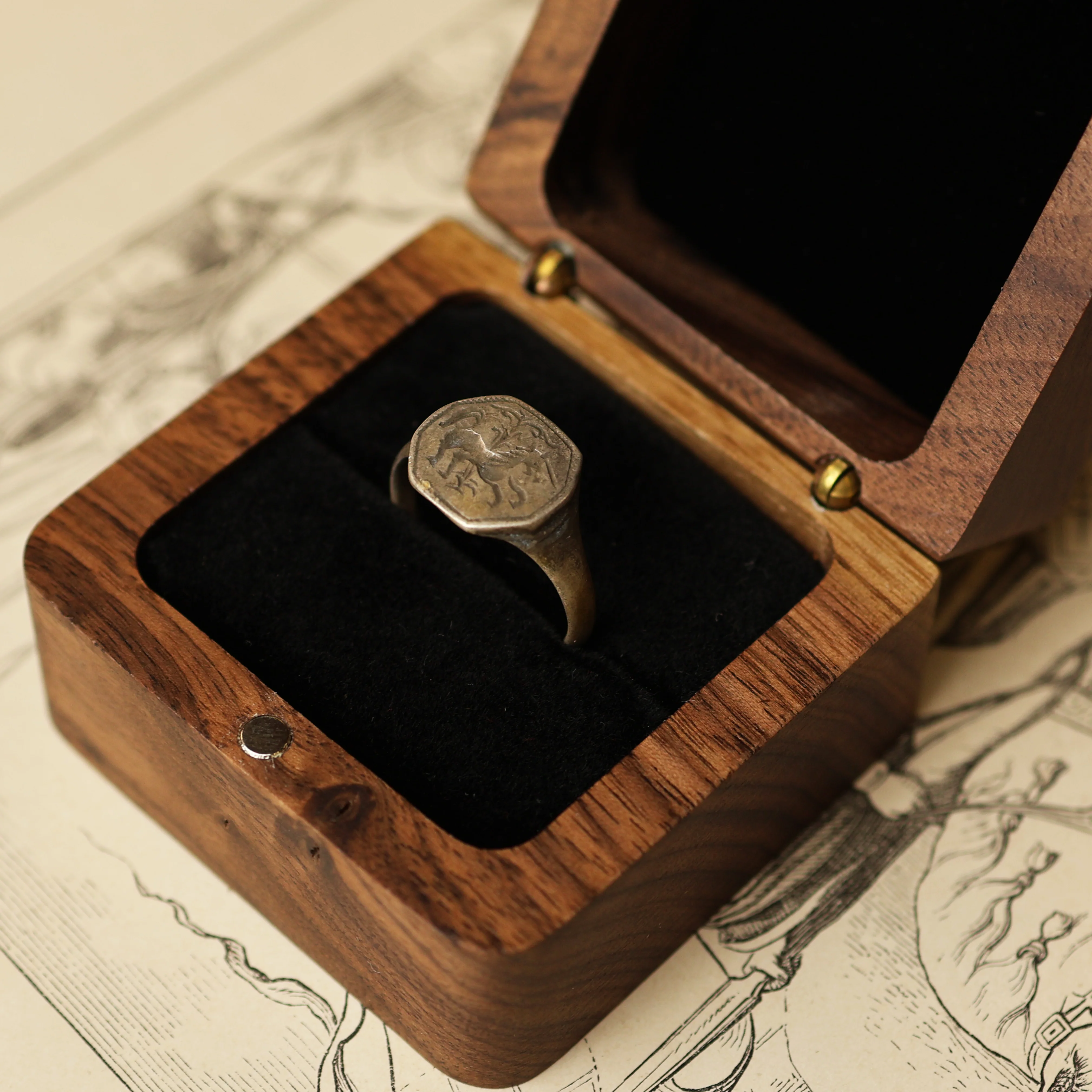
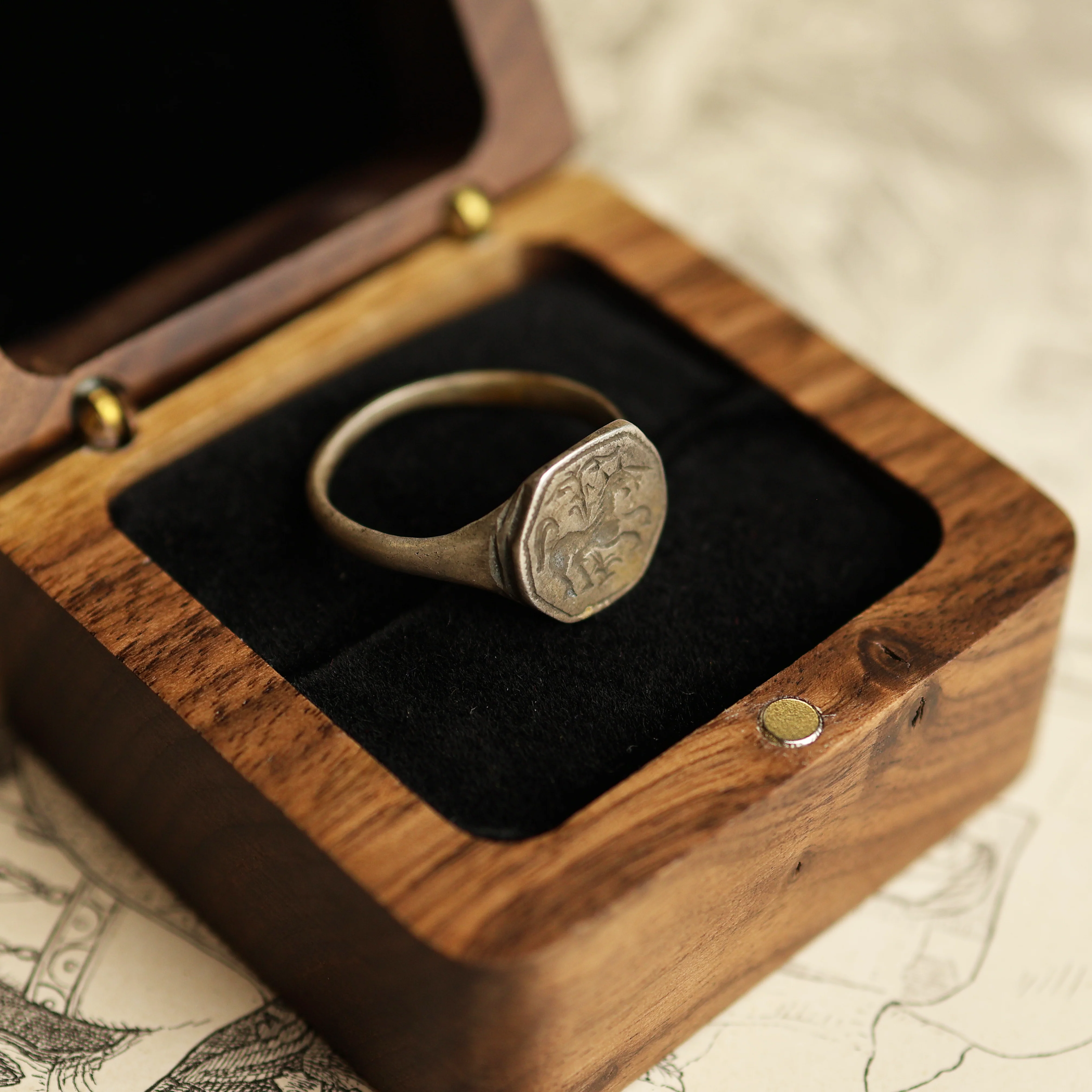
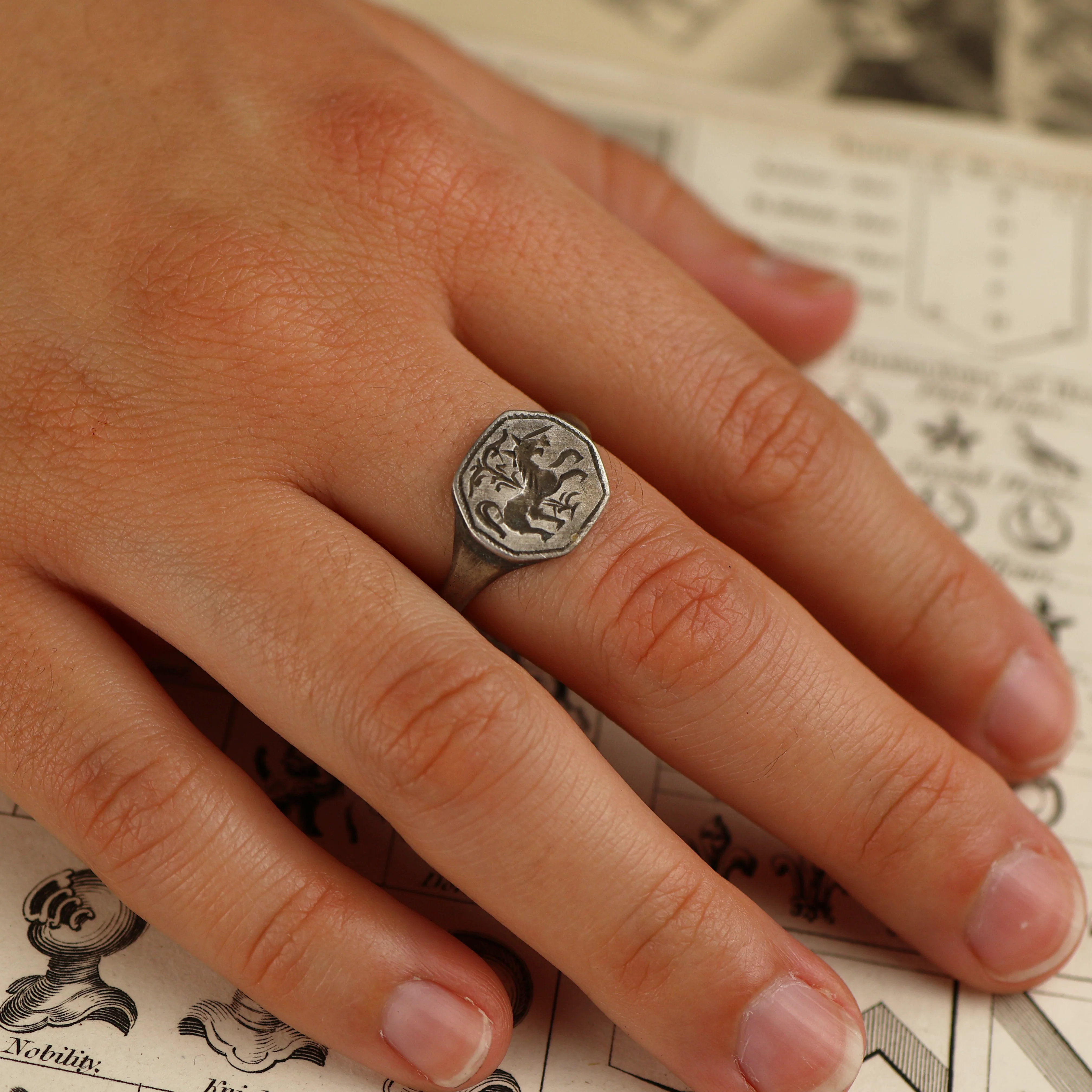
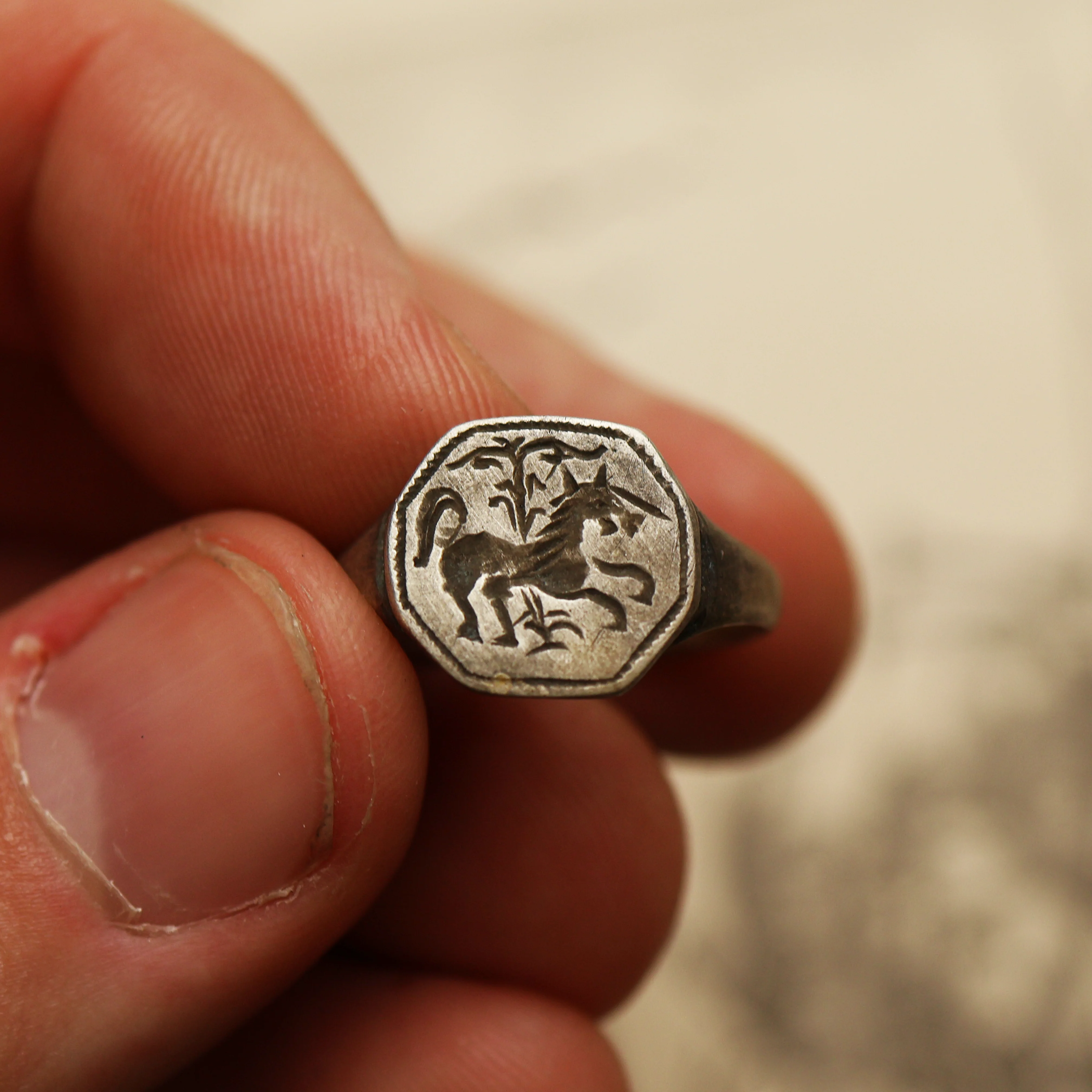
Dated to the late Medieval period (15th–16th centuries A.D.), this silver signet ring features an octagonal bezel delicately incised with a prancing horse encircled by foliate tendrils, all framed within a finely executed border. The octagonal form of the bezel resonates with the geometric configurations of medieval architectural forms.
The equine figure—captured in motion with a sense of controlled vitality—evokes chivalric ideals of nobility, strength, and loyalty that were central to late medieval aristocratic culture.
In medieval visual culture, such motifs were rarely decorative alone; the horse, a frequent symbol of both martial prowess and divine guidance, may have served as a protective emblem, linking the wearer to a broader cosmology of power, order, and spiritual safeguarding. Though the ring’s silver surface now bears the quiet patina of age, it retains the resonance of its original function—as both personal adornment and amulet.
A note on signet rings: Signet rings were used to “sign” documents through the impression on hot wax of the symbol on the ring, which would lead to the owner. During the Medieval period, seal rings were widely used in trading to ensure the authenticity and security of a document or letter. The social status of the owner was reflected in the size and media of such seal rings, with the combination of motives engraved on the bezel providing further insight into the owner’s identity, such as their place in a family.
Authenticity
Ancient Artifacts guarantees the Authenticity of items sold through a three layer system of protection:
- Ancient Artifacts exclusively sources artifacts from trusted and reputable antique distributors, many of whom have been selling Artifacts for decades.
- Next, the Artifact is inspected by an expert team member, who is professionally trained in counterfeit detection After the artifact passes inspection, the Certificate of Authenticity is signed and the Artifact is packaged.
- Finally, Ancient Artifacts gives an additional layer of protection by promising a full refund with no questions asked, in the extremely unlikely event that a counterfeit slips through our vetting process.
Your order will include:
- Medieval Ring as seen in photos
- Certificate of Authenticity
Ancient Artifacts relics are guaranteed authentic and have a 100% money back policy. Read more about our Mission and Promise for authenticity.
Original: $740.00
-65%$740.00
$259.00More Images
Medieval Galloping Horse Silver Ring
Date: c. 15th - 16th Century
Weight: 3.64 grams
Size: 8.25 (U.S.) / Q (U.K.)
History of the Artifact
Dated to the late Medieval period (15th–16th centuries A.D.), this silver signet ring features an octagonal bezel delicately incised with a prancing horse encircled by foliate tendrils, all framed within a finely executed border. The octagonal form of the bezel resonates with the geometric configurations of medieval architectural forms.
The equine figure—captured in motion with a sense of controlled vitality—evokes chivalric ideals of nobility, strength, and loyalty that were central to late medieval aristocratic culture.
In medieval visual culture, such motifs were rarely decorative alone; the horse, a frequent symbol of both martial prowess and divine guidance, may have served as a protective emblem, linking the wearer to a broader cosmology of power, order, and spiritual safeguarding. Though the ring’s silver surface now bears the quiet patina of age, it retains the resonance of its original function—as both personal adornment and amulet.
A note on signet rings: Signet rings were used to “sign” documents through the impression on hot wax of the symbol on the ring, which would lead to the owner. During the Medieval period, seal rings were widely used in trading to ensure the authenticity and security of a document or letter. The social status of the owner was reflected in the size and media of such seal rings, with the combination of motives engraved on the bezel providing further insight into the owner’s identity, such as their place in a family.
Authenticity
Ancient Artifacts guarantees the Authenticity of items sold through a three layer system of protection:
- Ancient Artifacts exclusively sources artifacts from trusted and reputable antique distributors, many of whom have been selling Artifacts for decades.
- Next, the Artifact is inspected by an expert team member, who is professionally trained in counterfeit detection After the artifact passes inspection, the Certificate of Authenticity is signed and the Artifact is packaged.
- Finally, Ancient Artifacts gives an additional layer of protection by promising a full refund with no questions asked, in the extremely unlikely event that a counterfeit slips through our vetting process.
Your order will include:
- Medieval Ring as seen in photos
- Certificate of Authenticity
Ancient Artifacts relics are guaranteed authentic and have a 100% money back policy. Read more about our Mission and Promise for authenticity.
Product Information
Product Information
Shipping & Returns
Shipping & Returns
Description
Date: c. 15th - 16th Century
Weight: 3.64 grams
Size: 8.25 (U.S.) / Q (U.K.)
History of the Artifact
Dated to the late Medieval period (15th–16th centuries A.D.), this silver signet ring features an octagonal bezel delicately incised with a prancing horse encircled by foliate tendrils, all framed within a finely executed border. The octagonal form of the bezel resonates with the geometric configurations of medieval architectural forms.
The equine figure—captured in motion with a sense of controlled vitality—evokes chivalric ideals of nobility, strength, and loyalty that were central to late medieval aristocratic culture.
In medieval visual culture, such motifs were rarely decorative alone; the horse, a frequent symbol of both martial prowess and divine guidance, may have served as a protective emblem, linking the wearer to a broader cosmology of power, order, and spiritual safeguarding. Though the ring’s silver surface now bears the quiet patina of age, it retains the resonance of its original function—as both personal adornment and amulet.
A note on signet rings: Signet rings were used to “sign” documents through the impression on hot wax of the symbol on the ring, which would lead to the owner. During the Medieval period, seal rings were widely used in trading to ensure the authenticity and security of a document or letter. The social status of the owner was reflected in the size and media of such seal rings, with the combination of motives engraved on the bezel providing further insight into the owner’s identity, such as their place in a family.
Authenticity
Ancient Artifacts guarantees the Authenticity of items sold through a three layer system of protection:
- Ancient Artifacts exclusively sources artifacts from trusted and reputable antique distributors, many of whom have been selling Artifacts for decades.
- Next, the Artifact is inspected by an expert team member, who is professionally trained in counterfeit detection After the artifact passes inspection, the Certificate of Authenticity is signed and the Artifact is packaged.
- Finally, Ancient Artifacts gives an additional layer of protection by promising a full refund with no questions asked, in the extremely unlikely event that a counterfeit slips through our vetting process.
Your order will include:
- Medieval Ring as seen in photos
- Certificate of Authenticity
Ancient Artifacts relics are guaranteed authentic and have a 100% money back policy. Read more about our Mission and Promise for authenticity.